Chachoengsao: The River Town East of Bangkok — Paet Riu, Wat Sothon and Life on the Bang Pakong
Most visitors to Thailand pass straight through Chachoengsao. They are on the road or the railway east from Bangkok, bound for Chonburi, Pattaya or the Cambodian border, and the green, watery province sliding past the window barely registers. That is a pity, because Chachoengsao — the river town the locals call Paet Riu — is one of the most rewarding stops in the whole of eastern Thailand, and it asks almost nothing of the traveller who pauses here: an hour or two by train, a walk along the river, a bowl of noodles in a century-old market, and a prayer at one of the most revered temples in the country.
Chachoengsao is a working river town on the Bang Pakong River, about 80 kilometres east of Bangkok. Bangkok families come here on weekends to pray at Wat Sothon, to eat giant river prawns, and to fill the boot of the car with mangoes. Nobody comes here for a beach holiday — the province has only a short stretch of Gulf coast — and that is exactly the point. This is a place of rice fields and orchards, of fish ponds and canals, of morning alms rounds and evening markets, a provincial capital that still runs on the rhythms of the river that made it.
This is the first post on Chachoengsao Life, and it is an overview: what the town is, why the river matters, the temple at its heart, the markets and the food, the pink Ganesha and the flying foxes, and what it is actually like to stay here for a while. Later posts will take each of those subjects in turn — the trains and the buses, the two old markets, the mango season, the real costs, and the long-stay life — but start here, on the riverbank, and you will understand the rest.
Paet Riu: Two Names, One River Town
The province's official name, Chachoengsao, is said to come from a word in the Chong language meaning "deep canal", a reminder that this land was settled long before Bangkok existed, by Khmer and Chong communities who lived by the water. The town's nickname, Paet Riu, is more colourful: it means "eight stripes", and it comes from the giant snakehead fish of the Bang Pakong, so big that a single fish had to be cut into eight strips to be dried in the sun. Say "Paet Riu" to a Thai person and they will know at once where you mean.
Today the province is home to about 733,000 people across 11 districts, and the town itself is a modest provincial capital on the west bank of the Bang Pakong River. The town was founded in 1549, in the Ayutthaya period, as a centre for military recruitment, and it became a province in 1916. It has never tried to be a resort, and it has never needed to be: about an hour and a half from Bangkok, it is a place people come to for a day, a weekend, or — increasingly — for a much longer stay.
The geography explains everything about Chachoengsao. To the west, the land is a low river plain: rice fields, fruit orchards and fish ponds stretching towards the Gulf of Thailand. To the east, the land rises into hills and forest, ending in the Khao Ang Rue Nai Wildlife Sanctuary, a protected forest of about 1,078 square kilometres where wild elephants still roam. The province's own slogan says it plainly: the bountiful Bang Pakong River, the sacred Luang Pho Sothon, Phraya Sri Sunthon — the great scholar of the Thai language — and the rich forests of Ang Rue Nai. River, temple, language and forest: that is Chachoengsao in a single sentence.
Walk the town today and you can still read that history in the streets: the old shophouses near the river, the morning market filling with produce from the plain, the temple bells, and the boats on the Bang Pakong. It is a small town, and its pleasures are small ones — a good bowl of noodles, a shady riverbank, a temple at dusk — but they add up to a place that stays with you long after the train has carried you on towards the border.
The Bang Pakong: The River That Feeds Everything
Every road in Chachoengsao leads, sooner or later, to the Bang Pakong River. The river is formed by the meeting of the Prachinburi and Nakhon Nayok rivers, and it runs for about 231 kilometres before it reaches the Gulf of Thailand at Bang Pakong district, the province's only coastal district. It is the river that made the province: its water fills the rice fields, its floodplain grows the orchards, its ponds raise the fish, and its banks carry the towns, the temples and the markets.
Locally the river is also called the Jolo River, from a Teochew word for the barramundi — the provincial fish, and a fish that appears on almost every riverside menu. The river's most famous table guest, though, is the giant river prawn, the great blue-clawed freshwater prawn that is grilled over charcoal and served with a fiery seafood dipping sauce. It is the dish people drive from Bangkok to eat, and it is worth the drive.
The river also grows the province's most famous fruit. The mango districts of Bang Khla and Khlong Khuean, east of the town along the river, produce mangoes that are sold across Thailand, and in mango season the province holds mango fairs where growers bring their best fruit. The two old markets of the province both grew up on the water: Ban Mai market, more than a hundred years old, on the riverbank in the town itself, and the Klong Suan 100-year market on a canal at the border with Samut Prakan, where the old wooden shophouses still stand over the water.
The river is not always gentle. In the dry season, from January to April, seawater pushes up from the Gulf and the lower river turns brackish, and farmers and fishermen plan around it. In the rainy season the river runs high, and people who live along its banks keep a careful eye on the water level. Living with the river, rather than against it, is the oldest skill in Chachoengsao, and you can see it in the houses on stilts, the boats tied at the temple piers, and the markets that open with the morning tide of trade.

The Bang Pakong River and Wat Sothon, seen from Baramee Sothon Bridge. Photo: Adirach Toumlamoon, CC BY-SA 4.0, via Wikimedia Commons.
Wat Sothon and Luang Pho Sothon: The Heart of the Province
On the riverbank in the town stands Wat Sothon Wararam Worawihan, the temple that is the heart of the province. It was first called Wat Hong, and it was built in the late Ayutthaya period, long before the town around it grew into a provincial capital. Its fame rests on a single image: Luang Pho Sothon, a stucco Buddha in the meditation posture, 1.48 metres high with a lap 1.65 metres wide, made by craftsmen of the Lan Chang tradition.
The legend of Luang Pho Sothon is told all over Thailand. The image is said to have floated up the Bang Pakong River and come to rest here, where it was enshrined in about 1770, in the early Thonburi period. People believe the image brings abundance and good health, and the belief has made Wat Sothon one of the most visited temples in the country. On weekends the temple fills with pilgrims from Bangkok and across eastern Thailand, who come to paste gold leaf on the image, to make offerings, and to pray for the year ahead.
The temple's modern ubosot, or ordination hall, is built in the applied Rattanakosin style, and its foundation ceremony was held in 1987 — a grand building for a grand image, with a roofline that can be seen from the bridge across the river. Walk through the temple on a Saturday morning and you will see the whole economy of devotion at work: gold leaf and lotus buds for sale, boiled eggs offered in thanks for answered prayers, and the souvenir and food shops across the road doing a brisk trade.
The temple has its own pier on the river, and it is a good place to stand and watch the Bang Pakong go by. Dress respectfully when you visit — shoulders and knees covered, shoes off inside the hall — and take your time. This is not a museum; it is a working temple, and the best way to understand Chachoengsao is to sit quietly in it for a while and watch the town come to pray.

Wat Sothon Wararam Worawihan, the temple of Luang Pho Sothon. Photo: Heuristics, public domain, via Wikimedia Commons.
Markets, Mangoes and Riverside Food
Chachoengsao is best understood through its markets, and the best of them is Ban Mai Riverside Market, in the town itself. It is more than a hundred years old, a row of wooden shophouses along the riverbank where the town has shopped for generations. Come in the morning for noodles and old-style coffee, served in the kind of coffee shop that has barely changed in fifty years, and stay to wander the stalls: fresh fish from the river, fruit from the orchards, and the small, practical goods of a provincial town.
A short drive away, on a canal at the border with Samut Prakan, is the Klong Suan 100 Year Market, another century-old market where the wooden shophouses stand over the water and the traders still arrive by boat. Between the two markets you get the whole story of the province: a river town and a canal town, both still trading the way they did a hundred years ago.
Then there are the mangoes. Mango season runs roughly from March to May, when the orchards of Bang Khla and Khlong Khuean are heavy with fruit and the province holds its mango fairs. This is the time to come hungry: ripe mangoes with sticky rice, green mango salads, and mangoes sold by the kilo from the back of a pickup truck at prices that make Bangkok seem a long way away.
For dinner, head for one of the riverside restaurants. The menu writes itself: grilled giant river prawns, tom yum made with river fish, barramundi fried whole or steamed with lime and chilli, and crab omelette, golden and generous. The cooking is bold, the portions are generous, and the prices are provincial — an excellent dinner for two here costs what a single modest dish might cost in Bangkok. This is one of the great pleasures of Chachoengsao: eating very well, by the river, for very little fuss.
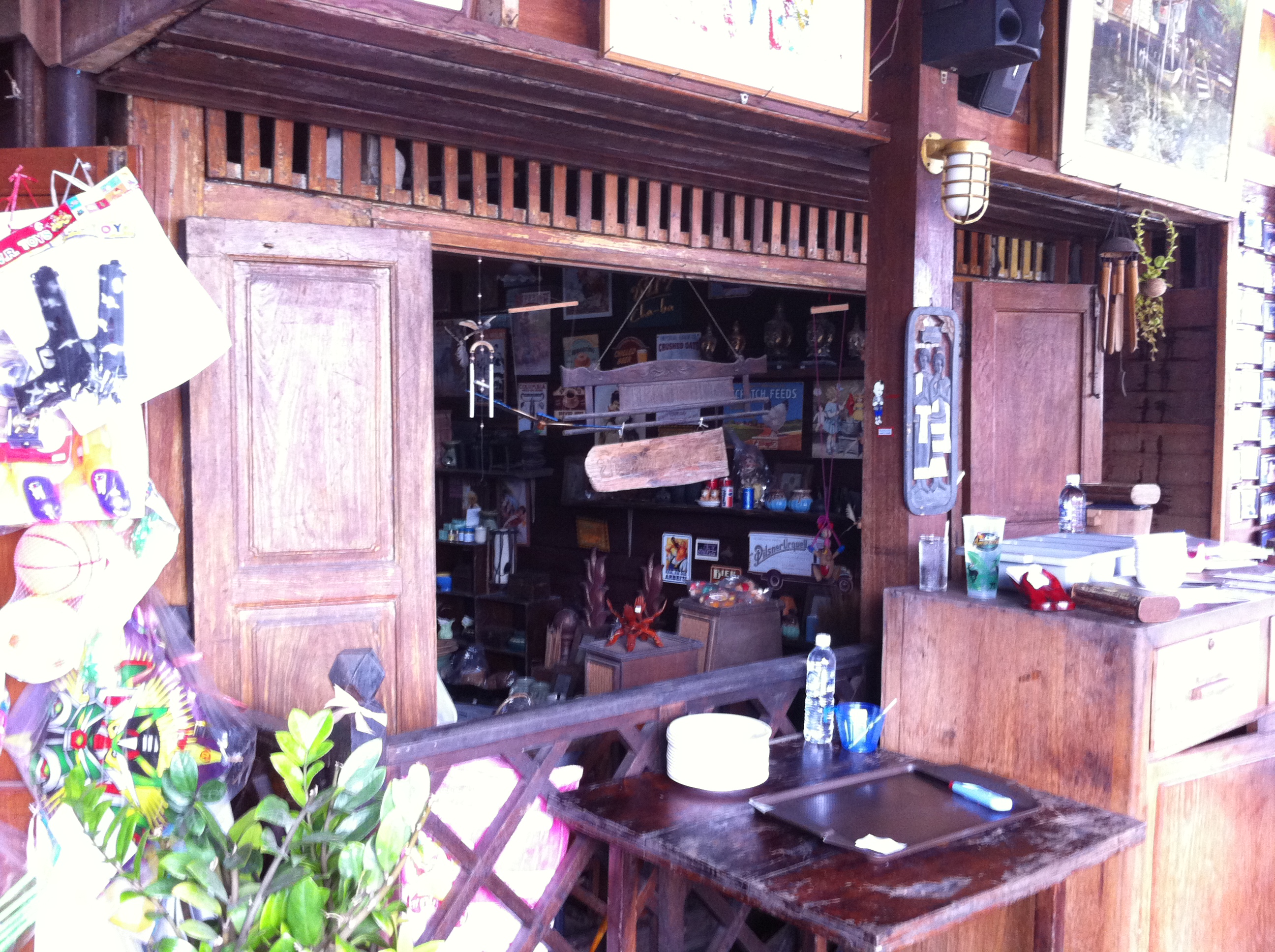
An old wooden shophouse at Ban Mai Riverside Market, more than a century old. Photo: Dextor DD., CC BY 3.0, via Wikimedia Commons.
Beyond the Town: A Pink Ganesha, Flying Foxes and Forest Edge
Chachoengsao keeps its surprises for those who go a little further. Between Bang Khla and Khlong Khuean stands Wat Saman Rattanaram, home to a giant reclining Ganesha, painted a vivid pink and lying at ease in the open air. It is one of the most photographed statues in Thailand, and the temple around it is a cheerful, colourful pilgrimage fairground, full of families, merit-making stalls and smaller shrines. Go early in the morning, before the coaches arrive, and you will have the pink Ganesha almost to yourself.
Not far away, at Wat Pho Bang Khla, the attraction is not a statue but a colony of flying foxes — great fruit bats that roost in the temple trees by the thousand. They hang there all day, wings folded like umbrellas, and at dusk they lift off in a dark, rustling cloud to feed in the orchards. It is one of the quiet spectacles of the province, and it is free.
Down at the coast, in Bang Pakong district, Wat Hong Thong is a temple built out over the sea, its halls standing on stilts above the mudflats, with the Gulf stretching away to the horizon. It is a reminder that Chachoengsao does touch the sea, even if it is not a beach province. Back in the town, the old provincial hall is worth a look for its architecture, and to the east the forest edge of Khao Ang Rue Nai waits for anyone who wants to trade the river for the hills — though the elephants, it should be said, are best admired from a respectful distance.

The giant pink reclining Ganesha at Wat Saman Rattanaram. Photo: กสิณธร ราชโอรส, CC BY-SA 4.0, via Wikimedia Commons.
What It Is Like to Stay a While
Stay in Chachoengsao for a few days and the town settles into a slow, easy routine. Mornings begin with the alms rounds, the monks walking the streets as the market opens. The middle of the day is for the river, the temples and the shade. Evenings are for the night markets, the food stalls and the walk along the riverbank as the light goes down. It is not a town of sights to be ticked off; it is a town to be lived in for a little while.
Staying here is straightforward and reasonable. Small hotels and guesthouses in the town charge provincial prices, and long-stay rentals — the kind of simple house or apartment that suits a month or a season — are available at prices that will surprise anyone used to Bangkok or the beach resorts. Food is inexpensive, transport is inexpensive, and the town is small enough to cross on foot, by bicycle or by a short songthaew ride.
Getting here is part of the pleasure. Chachoengsao Junction is a railway station with real character: the Eastern Line splits here, one branch running to Chonburi and Pattaya, the other to Prachinburi, Sa Kaeo and Aranyaprathet on the Cambodian border, and ordinary trains run back to Hua Lamphong in Bangkok. Buses and minivans run to Bangkok's eastern terminals and on to Chonburi, Pattaya and Rayong, and Highways 304 and 314 and the motorway put the town within easy reach of Suvarnabhumi Airport, which sits on this side of Bangkok.
Chachoengsao suits a particular kind of traveller: people who want real Thai provincial life rather than a resort, long-stayers who would rather have a river and a market than a beach bar, and anyone who loves a river town. If that sounds like you, come and stay a while. The river will be here, the temple will be open, and the mangoes — in season — will be waiting.
Chachoengsao Weather Now
Loading the live weather in Chachoengsao...
นักท่องเที่ยวส่วนใหญ่ที่มาเมืองไทยมักจะผ่านฉะเชิงเทราไปโดยไม่ได้แวะ พวกเขานั่งรถหรือนั่งรถไฟมุ่งหน้าไปทางตะวันออกของกรุงเทพฯ ไปชลบุรี พัทยา หรือชายแดนกัมพูชา และจังหวัดสีเขียวชุ่มน้ำที่เลื่อนผ่านหน้าต่างรถไปก็แทบไม่ทันได้สังเกต น่าเสียดาย เพราะฉะเชิงเทรา — เมืองริมน้ำที่คนท้องถิ่นเรียกว่าแปดริ้ว — เป็นจุดแวะที่น่าประทับใจที่สุดแห่งหนึ่งของภาคตะวันออก และเมืองนี้แทบไม่เรียกร้องอะไรจากนักเดินทางที่ยอมหยุดพักเลย ขอเพียงนั่งรถไฟมาสักชั่วโมงสองชั่วโมง เดินเล่นริมน้ำ กินก๋วยเตี๋ยวชามหนึ่งในตลาดเก่าแก่ร้อยปี และไปกราบไหว้ที่วัดที่ผู้คนเคารพนับถือมากที่สุดแห่งหนึ่งของประเทศ
ฉะเชิงเทราเป็นเมืองริมน้ำที่ทำงานจริงจัง ตั้งอยู่ริมแม่น้ำบางปะกง ห่างจากกรุงเทพฯ ประมาณ 80 กิโลเมตร ครอบครัวชาวกรุงเทพฯ มาที่นี่ในวันหยุดสุดสัปดาห์เพื่อไปกราบหลวงพ่อโสธรที่วัดโสธร กินกุ้งแม่น้ำตัวใหญ่ และซื้อผลไม้กลับบ้านเต็มท้ายรถ ไม่มีใครมาที่นี่เพื่อพักผ่อนชายทะเล — จังหวัดนี้มีชายฝั่งอ่าวไทยเพียงช่วงสั้น ๆ — และนั่นแหละคือเสน่ห์ของที่นี่ ที่นี่คือดินแดนของทุ่งนาและสวนผลไม้ บ่อปลาและคลอง การตักบาตรยามเช้าและตลาดยามเย็น เมืองหลวงของจังหวัดที่ยังคงดำเนินชีวิตไปตามจังหวะของสายน้ำที่สร้างเมืองนี้ขึ้นมา
นี่คือบทความแรกของบล็อกฉะเชิงเทรา ไลฟ์ และเป็นภาพรวมของเมืองนี้ ว่าเมืองนี้คืออะไร ทำไมแม่น้ำจึงสำคัญ วัดที่เป็นหัวใจของจังหวัด ตลาดและอาหาร พระพิฆเนศสีชมพูและค้างคาวแม่ไก่ และชีวิตจริงของการอยู่ที่นี่สักพักเป็นอย่างไร บทความต่อ ๆ ไปจะพาไปเจาะลึกแต่ละเรื่อง ทั้งรถไฟและรถโดยสาร ตลาดเก่าทั้งสองแห่ง ฤดูมะม่วง ค่าใช้จ่ายจริง และการอยู่ระยะยาว แต่เริ่มต้นที่นี่ ริมแม่น้ำ แล้วคุณจะเข้าใจทุกอย่างที่เหลือ
แปดริ้ว: สองชื่อ หนึ่งเมืองริมน้ำ
ชื่ออย่างเป็นทางการของจังหวัด ฉะเชิงเทรา ว่ากันว่ามาจากคำในภาษาชอง แปลว่า "คลองลึก" เป็นเครื่องเตือนว่าดินแดนแห่งนี้มีผู้คนอาศัยอยู่มานานก่อนที่กรุงเทพฯ จะเกิดขึ้น โดยมีชาวเขมรและชาวชองที่ดำรงชีวิตอยู่ริมน้ำ ส่วนชื่อเล่นของเมือง แปดริ้ว นั้นมีที่มาที่สนุกกว่า แปลว่า "แปดแถบ" มาจากปลาช่อนยักษ์ในแม่น้ำบางปะกง ตัวใหญ่จนต้องแล่เป็นแปดชิ้นเพื่อตากแดดทำปลาแห้ง เพียงเอ่ยคำว่า "แปดริ้ว" คนไทยก็รู้ทันทีว่าหมายถึงที่ไหน
ปัจจุบันจังหวัดนี้มีประชากรประมาณ 733,000 คน ใน 11 อำเภอ และตัวเมืองก็เป็นเมืองหลวงจังหวัดขนาดพอเหมาะ ตั้งอยู่ริมฝั่งตะวันตกของแม่น้ำบางปะกง เมืองนี้ก่อตั้งขึ้นในปี พ.ศ. 2092 ในสมัยอยุธยา เป็นศูนย์กลางการเกณฑ์ทหาร และได้เป็นจังหวัดในปี พ.ศ. 2459 เมืองนี้ไม่เคยพยายามเป็นเมืองตากอากาศ และไม่เคยจำเป็นต้องเป็นเช่นนั้น ห่างจากกรุงเทพฯ เพียงประมาณชั่วโมงครึ่ง เป็นสถานที่ที่ผู้คนมาเที่ยววันเดียว มาพักสุดสัปดาห์ หรือ — มากขึ้นเรื่อย ๆ — มาอยู่นานกว่านั้น
ภูมิศาสตร์ของที่นี่อธิบายทุกอย่างเกี่ยวกับฉะเชิงเทรา ทางทิศตะวันตกเป็นที่ราบลุ่มริมแม่น้ำ ทุ่งนา สวนผลไม้ และบ่อปลาทอดยาวไปจนถึงอ่าวไทย ส่วนทางทิศตะวันออกเป็นที่ราบสูงและป่าเขา สิ้นสุดที่เขตรักษาพันธุ์สัตว์ป่าเขาอ่างฤๅไน ป่าอนุรักษ์พื้นที่ประมาณ 1,078 ตารางกิโลเมตร ที่ช้างป่ายังคงเดินเตร่อยู่ คำขวัญประจำจังหวัดกล่าวไว้อย่างชัดเจน แม่น้ำบางปะกงอันอุดมสมบูรณ์ หลวงพ่อโสธรอันศักดิ์สิทธิ์ พระยาศรีสุนทรโวหาร ผู้เชี่ยวชาญภาษาไทย และป่าอันอุดมของอ่างฤๅไน แม่น้ำ วัด ภาษา และป่า นั่นคือฉะเชิงเทราในประโยคเดียว
เดินเล่นในตัวเมืองวันนี้ คุณยังอ่านประวัติศาสตร์นั้นได้จากท้องถนน ตึกแถวเก่าแก่ริมแม่น้ำ ตลาดเช้าที่เต็มไปด้วยผลผลิตจากที่ราบ เสียงระฆังวัด และเรือบนแม่น้ำบางปะกง เมืองนี้เป็นเมืองเล็ก และความสุขของเมืองนี้ก็เป็นความสุขเล็ก ๆ ก๋วยเตี๋ยวชามอร่อย ริมน้ำที่ร่มรื่น วัดยามเย็น แต่ทั้งหมดรวมกันเป็นสถานที่ที่ตราตรึงใจไปนาน หลังจากรถไฟพาคุณเดินทางต่อไปยังชายแดน
แม่น้ำบางปะกง: สายน้ำที่หล่อเลี้ยงทุกสิ่ง
ถนนทุกสายในฉะเชิงเทรา ไม่ช้าก็เร็วย่อมพาไปถึงแม่น้ำบางปะกง แม่น้ำสายนี้เกิดจากการบรรจบกันของแม่น้ำปราจีนบุรีและแม่น้ำนครนายก ไหลยาวประมาณ 231 กิโลเมตร ก่อนจะไหลลงอ่าวไทยที่อำเภอบางปะกง ซึ่งเป็นอำเภอชายทะเลแห่งเดียวของจังหวัด แม่น้ำสายนี้คือผู้สร้างจังหวัด น้ำของแม่น้ำเติมเต็มทุ่งนา ที่ราบน้ำท่วมถึงปลูกสวนผลไม้ บ่อน้ำเลี้ยงปลา และริมฝั่งแม่น้ำเป็นที่ตั้งของเมือง วัด และตลาด
คนท้องถิ่นเรียกแม่น้ำสายนี้อีกชื่อว่าแม่น้ำโจ้โล้ มาจากคำแต้จิ๋วที่หมายถึงปลากะพง ซึ่งเป็นปลาประจำจังหวัด และเป็นปลาที่ปรากฏอยู่บนเมนูร้านอาหารริมน้ำแทบทุกแห่ง แต่แขกที่โด่งดังที่สุดบนโต๊ะอาหารของแม่น้ำสายนี้คือกุ้งแม่น้ำตัวใหญ่ กุ้งน้ำจืดก้ามสีฟ้าตัวโต ที่ย่างบนเตาถ่าน เสิร์ฟพร้อมน้ำจิ้มซีฟู้ดรสจัดจ้าน เป็นอาหารที่ผู้คนขับรถมาจากกรุงเทพฯ เพื่อมากิน และคุ้มค่ากับการขับรถมา
แม่น้ำยังให้ผลไม้ที่มีชื่อเสียงที่สุดของจังหวัด อำเภอบางคล้าและอำเภอคลองเขื่อน ทางตะวันออกของตัวเมืองริมแม่น้ำ ผลิตมะม่วงที่ขายไปทั่วประเทศ และในฤดูมะม่วง จังหวัดจะจัดงานเทศกาลมะม่วงที่ชาวสวนนำผลไม้ที่ดีที่สุดมาประชันกัน ตลาดเก่าทั้งสองแห่งของจังหวัดเติบโตขึ้นมาริมน้ำทั้งคู่ ตลาดบ้านใหม่ อายุมากกว่าร้อยปี ริมแม่น้ำในตัวเมือง และตลาดคลองสวน 100 ปี บนคลองที่ชายแดนสมุทรปราการ ซึ่งตึกแถวไม้เก่าแก่ยังคงตั้งอยู่เหนือน้ำ
แม่น้ำไม่ได้อ่อนโยนเสมอไป ในฤดูแล้ง ตั้งแต่เดือนมกราคมถึงเมษายน น้ำทะเลจะดันขึ้นมาจากอ่าวไทย ทำให้แม่น้ำตอนล่างกลายเป็นน้ำกร่อย และชาวนาและชาวประมงต้องวางแผนตามฤดูกาลนั้น ส่วนในฤดูฝนแม่น้ำจะไหลเชี่ยวและระดับน้ำสูง และผู้คนที่อาศัยอยู่ริมฝั่งก็เฝ้าดูระดับน้ำอย่างระมัดระวัง การอยู่กับแม่น้ำ ไม่ใช่การต่อสู้กับแม่น้ำ คือทักษะที่เก่าแก่ที่สุดของฉะเชิงเทรา และคุณเห็นได้จากบ้านยกพื้นสูง เรือที่ผูกไว้ที่ท่าเรือวัด และตลาดที่เปิดพร้อมกับคลื่นการค้าขายยามเช้า
วัดโสธรและหลวงพ่อโสธร: หัวใจของจังหวัด
ริมแม่น้ำในตัวเมือง ตั้งอยู่วัดโสธรวรารามวรวิหาร วัดที่เป็นหัวใจของจังหวัด เดิมชื่อวัดหงษ์ สร้างขึ้นในสมัยอยุธยาตอนปลาย นานก่อนที่เมืองรอบ ๆ จะเติบโตเป็นเมืองหลวงของจังหวัด ชื่อเสียงของวัดอยู่ที่พระพุทธรูปองค์เดียว หลวงพ่อโสธร พระพุทธรูปปูนปั้นปางสมาธิ สูง 1.48 เมตร หน้าตักกว้าง 1.65 เมตร ฝีมือช่างล้านช้าง
ตำนานของหลวงพ่อโสธรเล่าขานกันทั่วประเทศไทย ว่ากันว่าพระพุทธรูปองค์นี้ลอยมาตามแม่น้ำบางปะกงและมาหยุดอยู่ที่นี่ แล้วอัญเชิญขึ้นมาประดิษฐานราวปี พ.ศ. 2313 ในสมัยธนบุรีตอนต้น ผู้คนเชื่อว่าหลวงพ่อโสธรนำความอุดมสมบูรณ์และสุขภาพที่ดีมาให้ และความเชื่อนี้ทำให้วัดโสธรเป็นหนึ่งในวัดที่มีผู้คนมาเยือนมากที่สุดในประเทศ ในวันหยุดสุดสัปดาห์ วัดเต็มไปด้วยผู้แสวงบุญจากกรุงเทพฯ และทั่วภาคตะวันออก ที่มาปิดทองพระพุทธรูป ถวายเครื่องสักการะ และอธิษฐานขอพรสำหรับปีข้างหน้า
พระอุโบสถสมัยใหม่ของวัดสร้างในสถาปัตยกรรมรัตนโกสินทร์ประยุกต์ และมีพิธีวางศิลาฤกษ์ในปี พ.ศ. 2530 เป็นอาคารที่ยิ่งใหญ่สมกับพระพุทธรูปองค์สำคัญ หลังคาโบสถ์มองเห็นได้จากสะพานข้ามแม่น้ำ เดินชมวัดในเช้าวันเสาร์ คุณจะเห็นเศรษฐกิจแห่งศรัทธาทั้งหมดทำงาน ทองคำเปลวและดอกบัวขายอยู่ทั่วไป ไข่ต้มถวายเพื่อแก้บนเมื่อคำอธิษฐานสมปรารถนา และร้านขายของที่ระลึกและอาหารฝั่งตรงข้ามถนนขายดีเป็นเทน้ำเทท่า
วัดมีท่าเรือของตัวเองริมแม่น้ำ และเป็นสถานที่ที่ดีที่จะยืนชมแม่น้ำบางปะกงไหลผ่าน แต่งกายอย่างสุภาพเมื่อมาเยือน คลุมไหล่และเข่า ถอดรองเท้าก่อนเข้าอุโบสถ และใช้เวลาของคุณอย่างไม่เร่งรีบ ที่นี่ไม่ใช่พิพิธภัณฑ์ แต่เป็นวัดที่ยังใช้งานอยู่ และวิธีที่ดีที่สุดที่จะเข้าใจฉะเชิงเทราคือการนั่งเงียบ ๆ ในวัดสักพักและดูเมืองนี้มากราบไหว้
ตลาด มะม่วง และอาหารริมน้ำ
ฉะเชิงเทราเข้าใจได้ดีที่สุดผ่านตลาด และตลาดที่ดีที่สุดคือตลาดบ้านใหม่ ตลาดริมน้ำในตัวเมือง ตลาดนี้มีอายุมากกว่าร้อยปี เป็นแถวตึกแถวไม้ริมแม่น้ำที่เมืองนี้จับจ่ายใช้สอยมาหลายชั่วอายุคน มาในตอนเช้าเพื่อกินก๋วยเตี๋ยวและกาแฟโบราณ เสิร์ฟในร้านกาแฟแบบเก่าที่แทบไม่เปลี่ยนแปลงในห้าสิบปี แล้วเดินชมแผงขายของต่อไป ปลาสดจากแม่น้ำ ผลไม้จากสวน และของใช้เล็ก ๆ น้อย ๆ ของเมืองต่างจังหวัด
ขับรถไปไม่ไกล บนคลองที่ชายแดนสมุทรปราการ คือตลาดคลองสวน 100 ปี ตลาดเก่าแก่อีกร้อยปีที่ตึกแถวไม้ตั้งอยู่เหนือน้ำ และพ่อค้าแม่ค้ายังคงมาทางเรือ ระหว่างตลาดทั้งสองแห่งนี้ คุณจะได้เรื่องราวทั้งหมดของจังหวัด เมืองริมน้ำและเมืองริมคลอง ที่ยังคงค้าขายเหมือนเมื่อร้อยปีก่อน
แล้วก็มีมะม่วง ฤดูมะม่วงประมาณเดือนมีนาคมถึงพฤษภาคม เมื่อสวนมะม่วงในบางคล้าและคลองเขื่อนเต็มไปด้วยผลไม้ และจังหวัดจัดงานเทศกาลมะม่วง นี่คือเวลาที่ควรมาพร้อมความหิว มะม่วงสุกกับข้าวเหนียว ยำมะม่วง และมะม่วงขายเป็นกิโลจากท้ายรถกระบะ ในราคาที่ทำให้กรุงเทพฯ ดูไกลออกไปมาก
สำหรับมื้อเย็น ให้ไปที่ร้านอาหารริมน้ำสักแห่ง เมนูแทบไม่ต้องคิด กุ้งแม่น้ำย่าง ต้มยำปลาแม่น้ำ ปลากะพงทอดทั้งตัวหรือนึ่งมะนาว และไข่เจียวปู สีทองและใจป้ำ อาหารรสจัดจ้าน ปริมาณมาก และราคาแบบต่างจังหวัด มื้อเย็นชั้นดีสำหรับสองคนที่นี่ ราคาเท่ากับอาหารจานเดียวแบบพอประมาณในกรุงเทพฯ นี่คือความสุขที่ยิ่งใหญ่อย่างหนึ่งของฉะเชิงเทรา การกินอาหารอร่อยมาก ริมแม่น้ำ โดยไม่ต้องเรื่องมาก
นอกเมือง: พระพิฆเนศสีชมพู ค้างคาวแม่ไก่ และชายป่า
ฉะเชิงเทราเก็บความประหลาดใจไว้สำหรับผู้ที่เดินทางไกลออกไปอีกนิด ระหว่างบางคล้าและคลองเขื่อน ตั้งอยู่วัดสมานรัตนาราม ที่ประดิษฐานพระพิฆเนศปางนอนองค์ใหญ่ ทาสีชมพูสดใส นอนพักผ่อนอย่างสบายกลางแจ้ง เป็นหนึ่งในรูปปั้นที่ถูกถ่ายภาพมากที่สุดในประเทศไทย และวัดรอบ ๆ ก็เป็นงานวัดแสวงบุญที่สนุกสนานและมีสีสัน เต็มไปด้วยครอบครัว แผงทำบุญ และศาลเจ้าเล็ก ๆ มาแต่เช้าตรู่ ก่อนที่รถบัสจะมาถึง แล้วคุณจะได้ชมพระพิฆเนศสีชมพูแทบเพียงลำพัง
ไม่ไกลจากที่นั่น ที่วัดโพธิ์บางคล้า สิ่งที่ดึงดูดไม่ใช่รูปปั้น แต่เป็นฝูงค้างคาวแม่ไก่ ค้างคาวผลไม้ตัวใหญ่ที่เกาะอยู่บนต้นไม้ในวัดเป็นพัน ๆ ตัว พวกมันห้อยอยู่ทั้งวัน ปีกพับเหมือนร่ม และตอนพลบค่ำพวกมันจะบินขึ้นเป็นฝูงมืด ๆ ส่งเสียงดังเพื่อไปหาอาหารในสวนผลไม้ เป็นหนึ่งในภาพเงียบ ๆ ที่งดงามของจังหวัด และชมได้ฟรี
ลงไปที่ชายฝั่ง ในอำเภอบางปะกง วัดหงษ์ทองเป็นวัดที่สร้างยื่นออกไปในทะเล ห้องต่าง ๆ ตั้งอยู่บนเสาเหนือพื้นเลน โดยมีอ่าวไทยทอดยาวไปจนถึงขอบฟ้า เป็นเครื่องเตือนว่าฉะเชิงเทราก็แตะทะเลเช่นกัน แม้จะไม่ใช่จังหวัดชายหาด กลับมาที่ตัวเมือง ศาลากลางจังหวัดเก่าแก่ก็ควรค่าแก่การชมสถาปัตยกรรม และทางทิศตะวันออก ชายป่าของเขาอ่างฤๅไนรอผู้ที่อยากแลกแม่น้ำกับภูเขา แม้ว่าช้างป่านั้นควรชมจากระยะที่เคารพและปลอดภัย
การอยู่ที่นี่สักพักเป็นอย่างไร
พักที่ฉะเชิงเทราสักสองสามวัน เมืองนี้จะค่อย ๆ เผยจังหวะชีวิตที่ช้าและสบาย เช้าวันใหม่เริ่มต้นด้วยการตักบาตร พระสงฆ์เดินบิณฑบาตตามท้องถนนขณะที่ตลาดเปิด กลางวันเป็นเวลาของแม่น้ำ วัด และร่มเงา ยามเย็นเป็นเวลาของตลาดนัด แผงอาหาร และเดินเล่นริมแม่น้ำขณะที่แสงอาทิตย์ลับขอบฟ้า เมืองนี้ไม่ใช่เมืองที่มีสถานที่ท่องเที่ยวให้ติ๊กเช็กลิสต์ แต่เป็นเมืองที่ควรใช้ชีวิตอยู่สักพัก
การอยู่ที่นี่เป็นเรื่องง่ายและสมเหตุสมผล โรงแรมและเกสต์เฮาส์เล็ก ๆ ในตัวเมืองคิดราคาแบบต่างจังหวัด และบ้านเช่าระยะยาว บ้านหรืออพาร์ตเมนต์เรียบง่ายที่เหมาะกับการอยู่เป็นเดือนหรือเป็นฤดูกาล มีให้เลือกในราคาที่จะทำให้คนที่คุ้นเคยกับกรุงเทพฯ หรือรีสอร์ตริมชายหาดต้องประหลาดใจ อาหารราคาไม่แพง การเดินทางราคาไม่แพง และเมืองนี้เล็กพอที่จะเดินเท้า ปั่นจักรยาน หรือนั่งรถสองแถวสั้น ๆ ข้ามเมืองได้
การเดินทางมาที่นี่เป็นส่วนหนึ่งของความสุข สถานีรถไฟชุมทางฉะเชิงเทราเป็นสถานีที่มีเอกลักษณ์ ทางรถไฟสายตะวันออกแยกออกที่นี่ สาขาหนึ่งไปชลบุรีและพัทยา อีกสาขาหนึ่งไปปราจีนบุรี สระแก้ว และอรัญประเทศที่ชายแดนกัมพูชา และมีรถไฟธรรมดาวิ่งกลับไปหัวลำโพงในกรุงเทพฯ รถโดยสารและรถตู้วิ่งไปยังสถานีขนส่งด้านตะวันออกของกรุงเทพฯ และต่อไปยังชลบุรี พัทยา และระยอง และทางหลวงหมายเลข 304 และ 314 รวมถึงมอเตอร์เวย์ ทำให้เมืองนี้อยู่ไม่ไกลจากสนามบินสุวรรณภูมิ ซึ่งตั้งอยู่ทางด้านนี้ของกรุงเทพฯ
ฉะเชิงเทราเหมาะกับนักเดินทางประเภทหนึ่ง ผู้คนที่ต้องการชีวิตต่างจังหวัดของไทยอย่างแท้จริง แทนที่จะเป็นรีสอร์ต ผู้ที่อยู่ระยะยาวที่อยากมีแม่น้ำและตลาดมากกว่าบาร์ริมชายหาด และใครก็ตามที่รักเมืองริมน้ำ ถ้านั่นฟังดูเหมือนคุณ มาอยู่ที่นี่สักพักเถอะ แม่น้ำจะอยู่ที่นี่ วัดจะเปิดอยู่ และมะม่วง — ในฤดูกาล — จะรอคุณอยู่
About the Authors — Chachoengsao Life is written by Scott and Jay, who live in Thailand and run a small, family-run group of condos in Patong, Phuket, through patong-thailand.com. We travel Thailand the same way our readers do — by train, bus and river boat, with a market bag and an appetite — and we write about the places we find as we go. If you are heading to Phuket after the east, come and stay a while with us in Patong.


Comments
Post a Comment